
A home panel
Share the planned appliances or equipment and the reason for replacement. We review the existing supply before deciding whether service capacity also needs to change.
Discuss a home panel
Electrical services / Greater Los Angeles
Choose a panel upgrade around the property’s electrical needs. We review the existing equipment, planned loads and utility requirements to define whether the job is a panel replacement, additional distribution or a service upgrade.
Plan a panel upgrade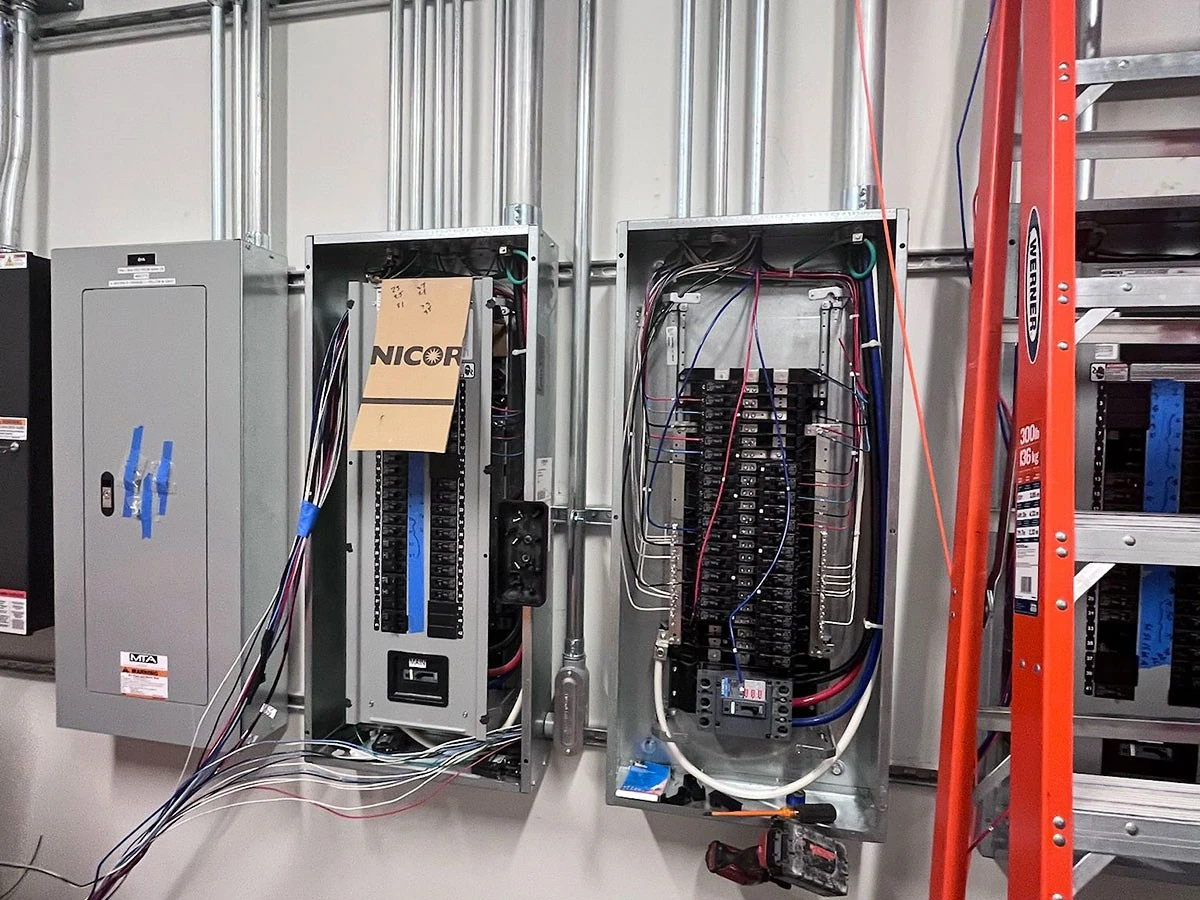
Share the planned appliances or equipment and the reason for replacement. We review the existing supply before deciding whether service capacity also needs to change.
Discuss a home panelA panelboard serves branch circuits. Work involving the larger main distribution assembly belongs in a switchboard or switchgear review. Include operating hours and available equipment records.
Discuss a commercial panelboardA program covering many apartments needs unit access, representative panel and feeder review, and a phased work plan. Shared meter equipment is a separate scope.
Plan an apartment panel programEstimate differences often come from access, equipment location, related conductor work and the shutdown sequence. See obsolete-panel replacement options.
Replacing a damaged or obsolete panel may be possible without increasing the utility service. Adding larger electrical loads may require a wider capacity review. We assess the installation and proposed equipment so the recommendation addresses the actual need.

Age, visible damage, repeated faults, available parts and any inspection or insurance requirements can prompt a review. A brand name alone does not establish the condition of every panel. We identify the equipment and discuss suitable repair or replacement options for the property.
Panel work may also involve meter equipment, conductors, grounding and bonding, clearances or a change in location. The proposal should identify what is included and how permit, inspection and utility steps will be coordinated. We discuss expected interruptions after the requirements are understood.
We work on panels for single-family homes, ADUs, builder standard and custom homes, and multifamily properties. The existing installation and proposed loads guide the equipment and installation scope.
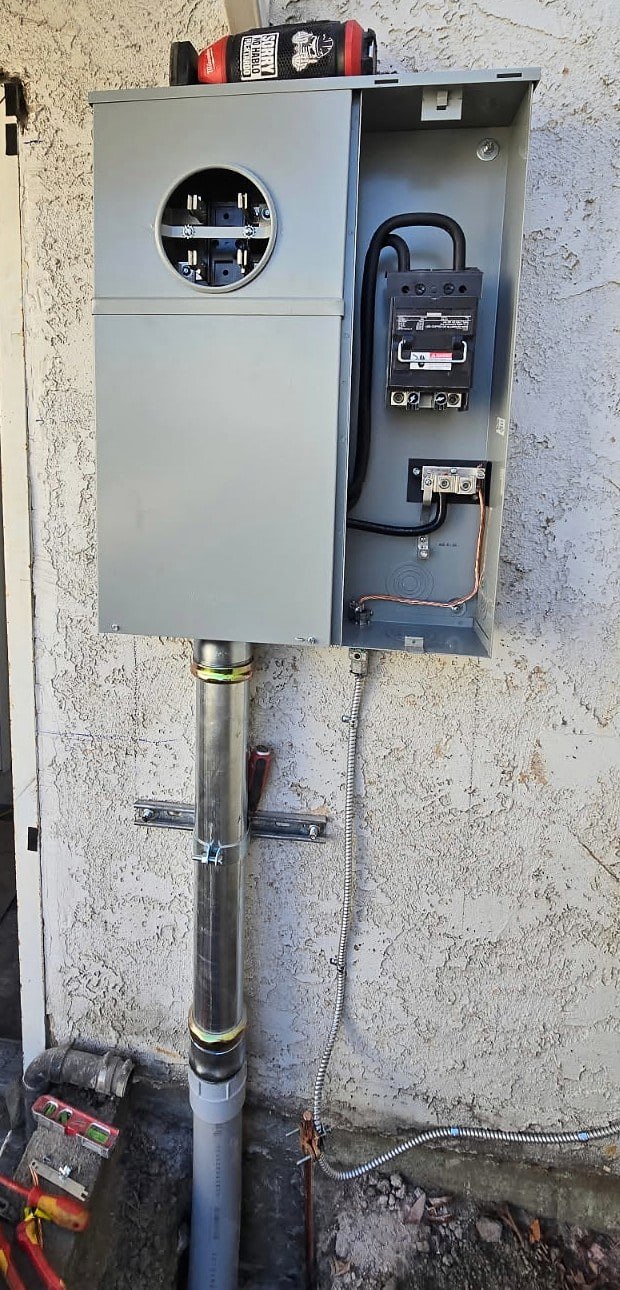
FROM OUR PROJECT PHOTOGRAPHS
This underground-fed commercial meter-socket installation is shown during work in Burbank. The photograph records the enclosure, meter position and conduit before the installation is closed up.
No. The appropriate service capacity depends on the existing demand, proposed loads and the supply arrangement. We review those inputs before recommending a size.
The interruption depends on the equipment, installation sequence, inspections and utility reconnection. An estimate cannot establish a fixed outage for every property. We discuss the project-specific plan before scheduling.
That depends on the panel’s condition and the components approved for the exact equipment. We assess whether a suitable repair is available and whether it addresses the reason for the work.
Share the insurer’s written requirements and any inspection report. We can discuss the electrical work needed for the property. The insurer makes its own coverage decisions, so electrical work does not guarantee an insurance outcome.
BEFORE WE QUOTE THE WORK
The number on the main breaker is only part of the picture. A load calculation considers existing demand and proposed equipment such as a heat pump, electric range or EV charger. Spare breaker spaces do not establish available capacity. A full panel does not automatically mean the utility service must be enlarged. Separate a need for more circuit spaces, a damaged panel and a need for additional service capacity.
A complete proposal identifies the panel, breakers, service or feeder conductors, meter equipment, grounding and bonding, and any required service-entrance work. Equipment ratings and available fault current also matter. A higher-rated panel cannot increase the capacity of undersized upstream equipment by itself. Working clearances and utility access can affect the replacement location.
Utility involvement, permits, inspection and reconnection need the correct sequence for the address. A replacement in place and a relocation with a new service route can have very different schedules. Ask which charges and repairs are included, who handles the utility application, and how the outage will be communicated. Final equipment choices depend on site assessment and applicable requirements.
Utility planning references: LADWP requirements · SCE requirements
Continue planning